
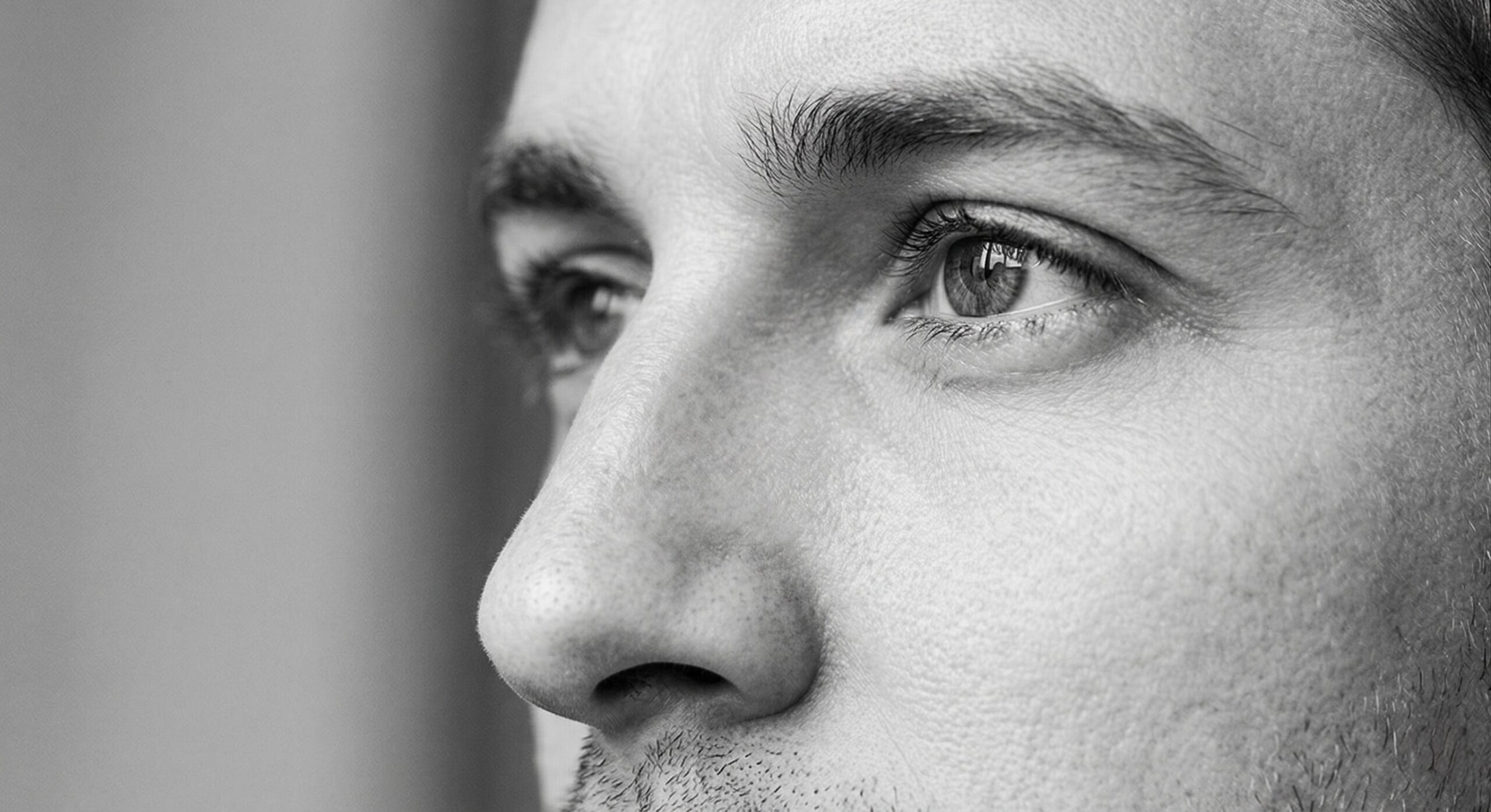
Male
Rhinoplasty
Rhinoplasty Designed for the Male Face
It’s a Different Surgery
Rhinoplasty is different in men and women, and the nose may be the most potent anatomical feature that can feminize a face when changed. The anatomy is different, the aesthetic goals are different, and the threshold for success is defined differently. Over-feminization, over-reduction, and an operated appearance are real risks when male and female rhinoplasty are approached the same way.
It starts with the first impression of a face. The cheeks, jaw, and brows send a signal of masculinity. When the nose mismatches that signal, there is an immediate clash, and this is what many men fear when considering surgery. The nose does not need to disappear. It needs to belong.
There is nothing wrong with wanting a smaller nose or a perfectly straight bridge. Men can have exactly that. But in general, what male patients seek is a nose that has been refined, one that no longer draws attention for the wrong reasons, but remains unmistakably masculine and gives no indication that surgery ever took place.
Balanced to the Face
Male rhinoplasty is planned relative to the forehead, brows, cheeks, and jaw. The nose must fit in with the other features of the face that signal masculinity, not stand apart from them.
Preserved Masculinity
Male rhinoplasty may include a straight bridge, or even intentionally leaving behind some degree of bump or irregularity. Tip rotation is conservative and the width of the nose is maintained to match the other facial features.
No Trace of Surgery
The standard is a result that no one notices. Most male patients are seeking refinement, not transformation. The goal is a nose you could have been born with, not one that doesn’t fit your face.
Natural is Masculine
The bridge is one of the most defining features of the male nose. Some men want it straight and refined. Others want it refined but with character, a subtle prominence that reads as strong rather than operated. What almost no male patient wants is a bridge that has been taken too low, and this is one of the more significant risks in male rhinoplasty.
Outside of intentional reduction, over-lowering can happen when conventional rasps and chisels affect a wider area than intended. These instruments can induce unintended trauma to adjacent bone, bone that was never part of the plan gets reduced in the process. The result is a bridge that sits lower than it should, a slope where there was none, and a profile that reads as feminized. For a male patient, this is one of the hardest outcomes to recover from and one of the most common drivers of revision surgery.
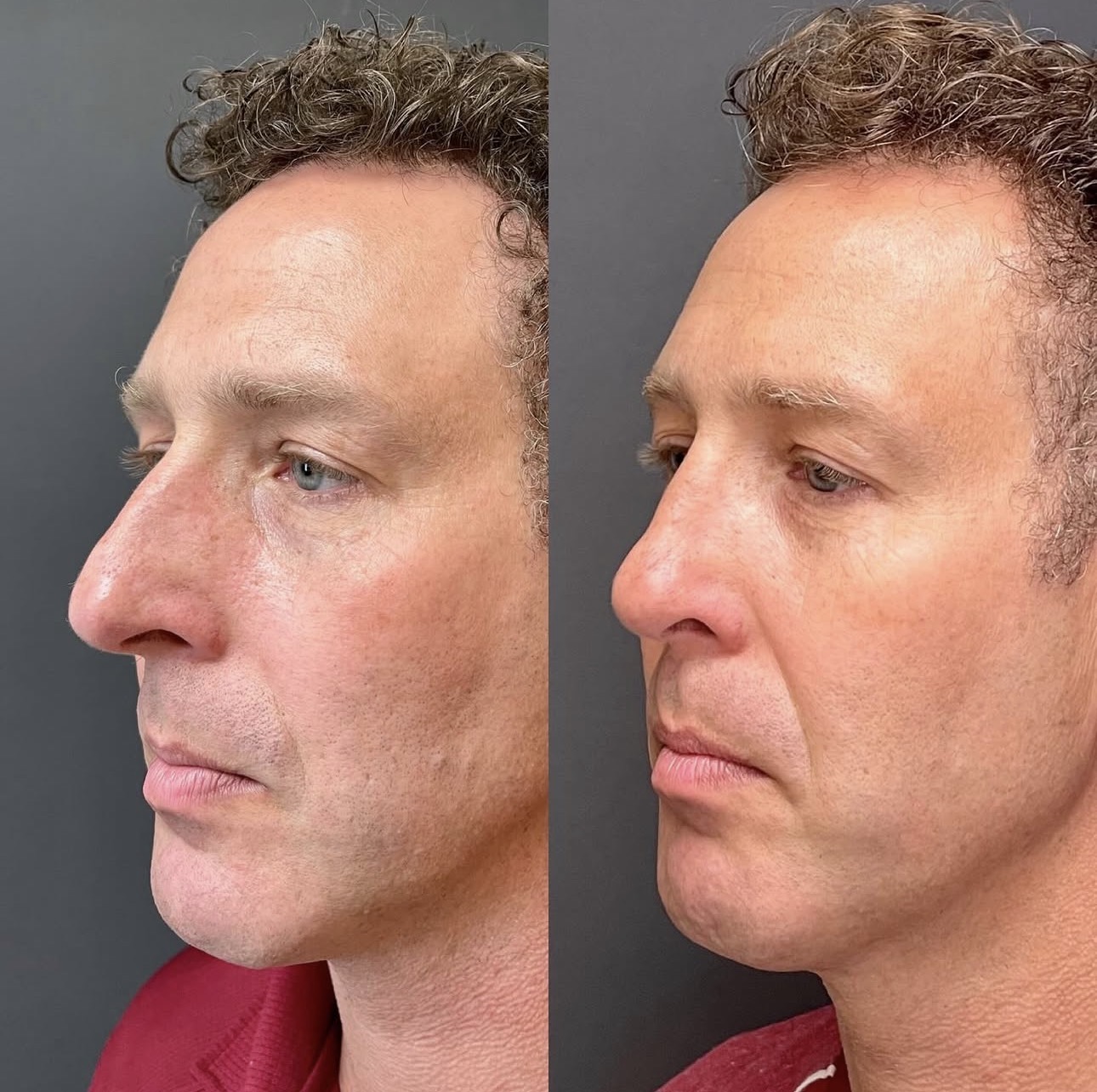
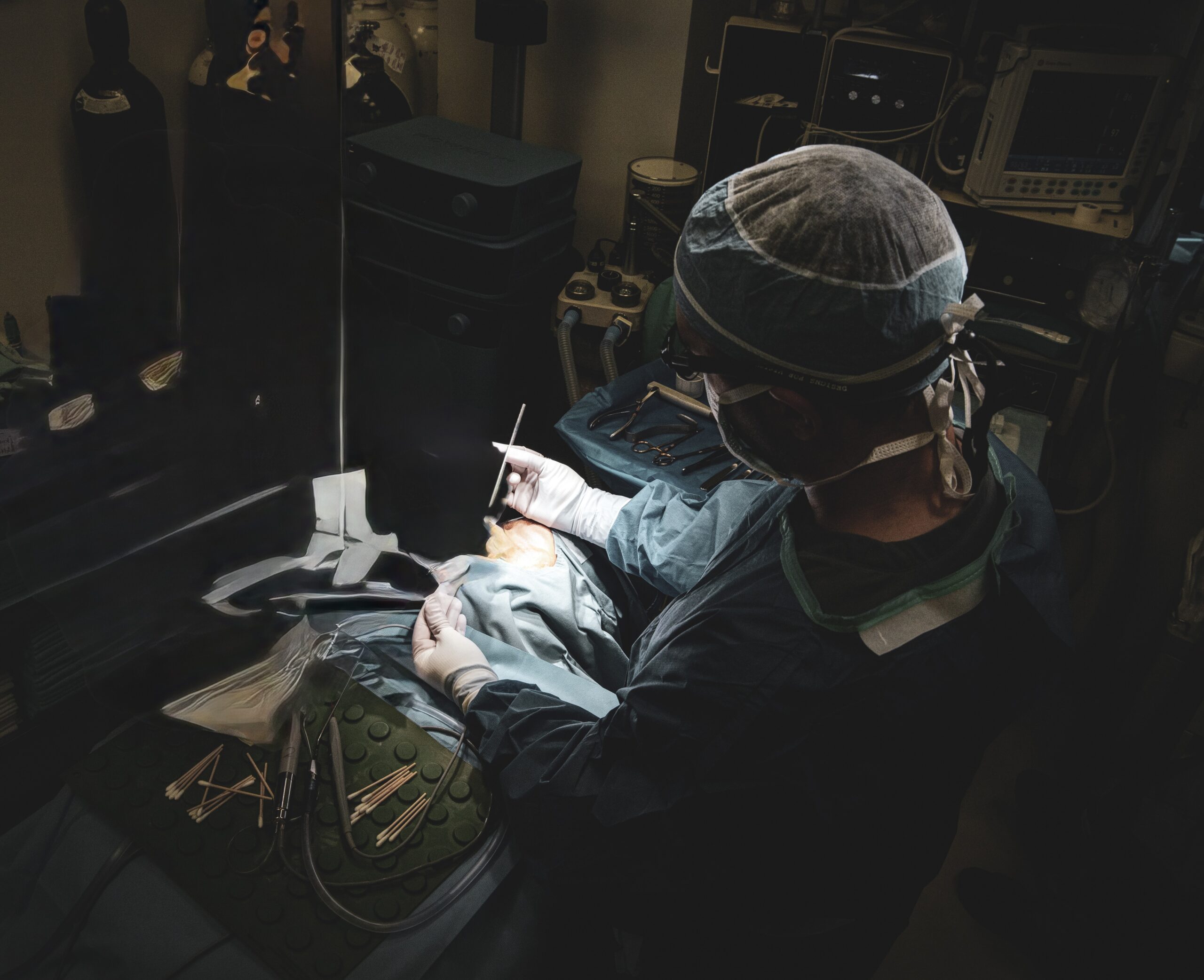
Dr. Hashemi utilizes ultrasonic rhinoplasty techniques that are particularly well suited to male rhinoplasty. The piezoelectric instrument reduces bone slowly, precisely, and with finesse, in a controlled, intentional fashion that conventional instruments cannot replicate. Accidental trauma and over-resection are avoided. The surgical plan stays the surgical plan, the bridge stays where it belongs, masculine features are preserved, and the result is predictable from the start.
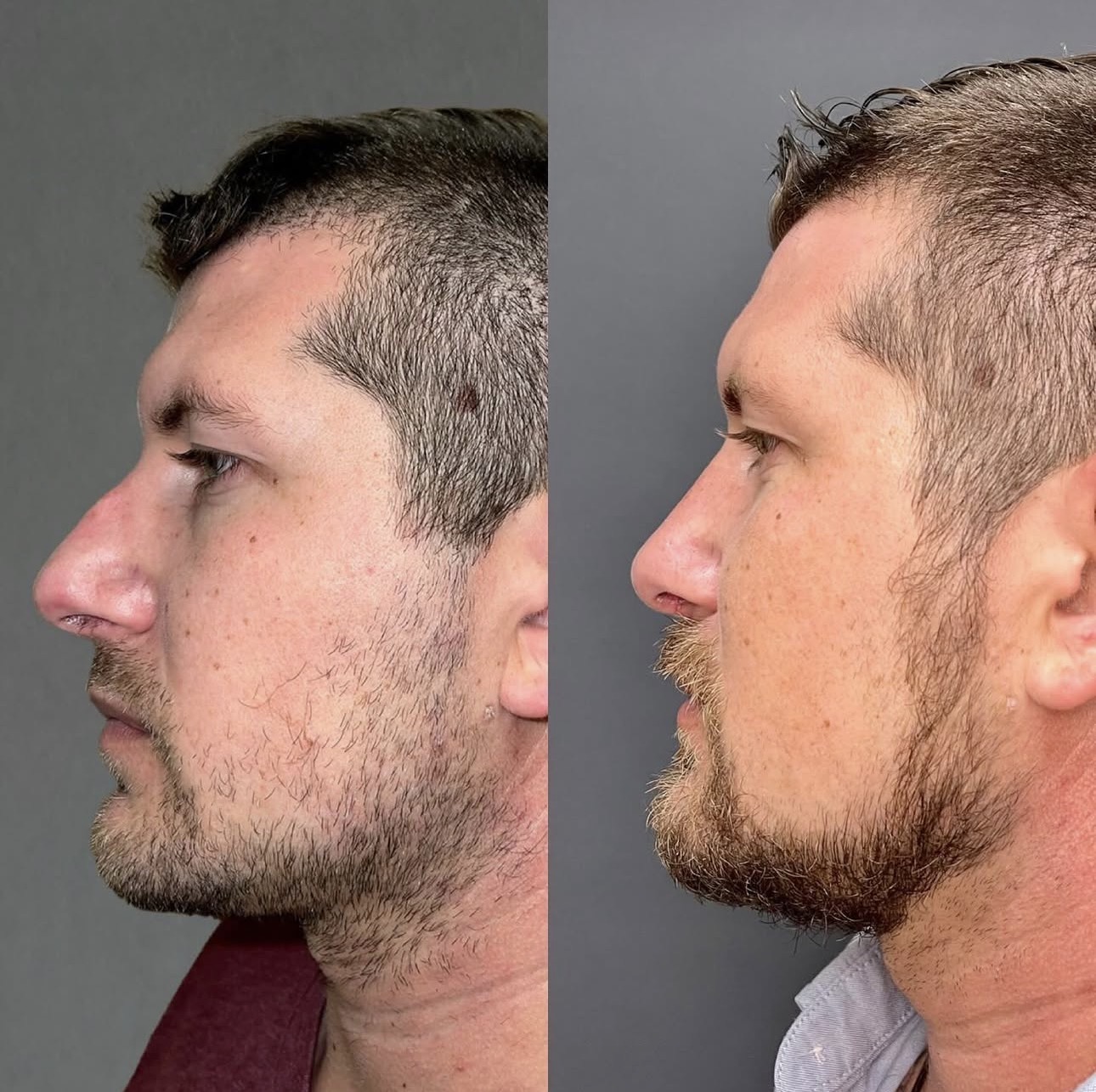
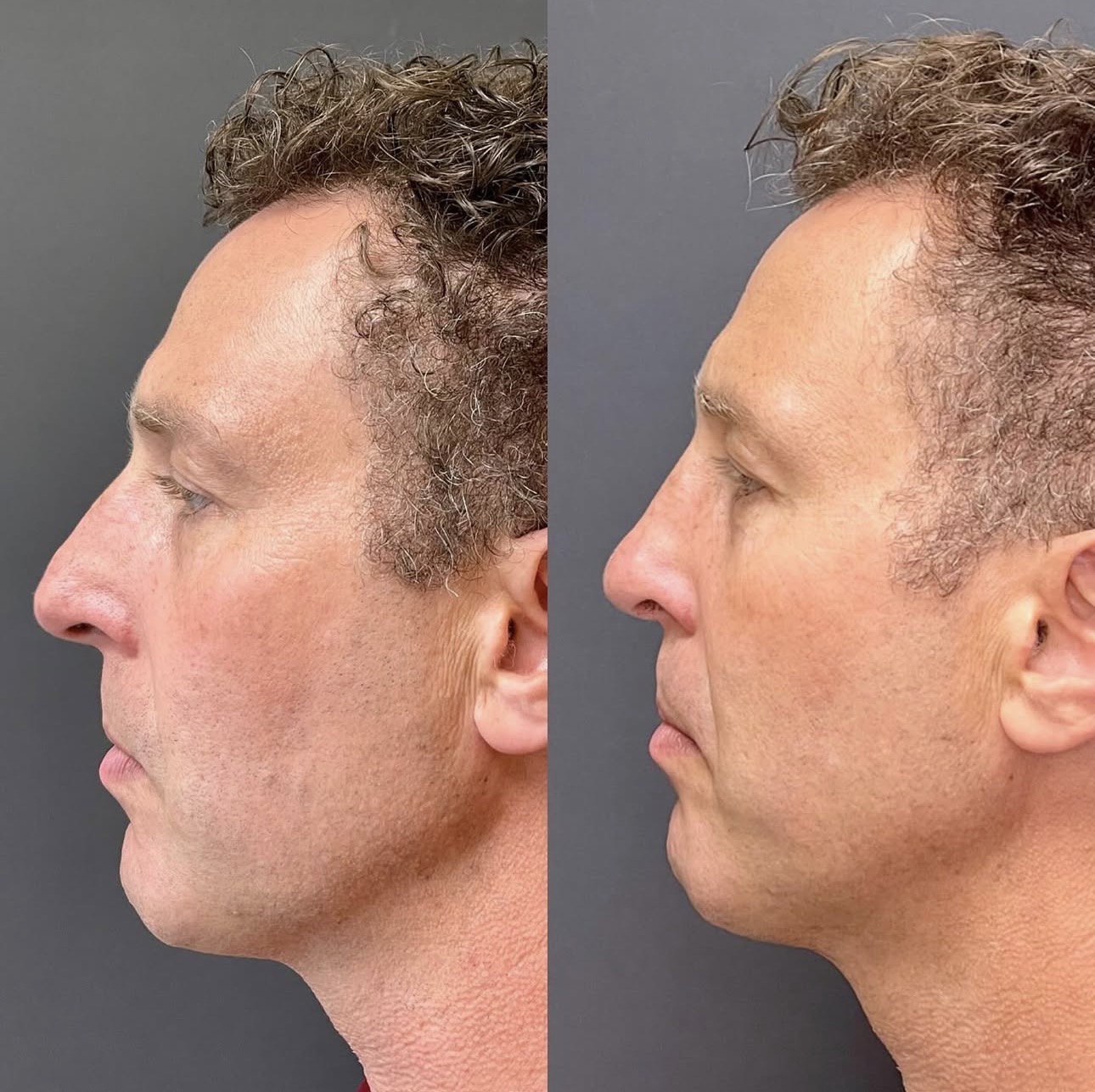
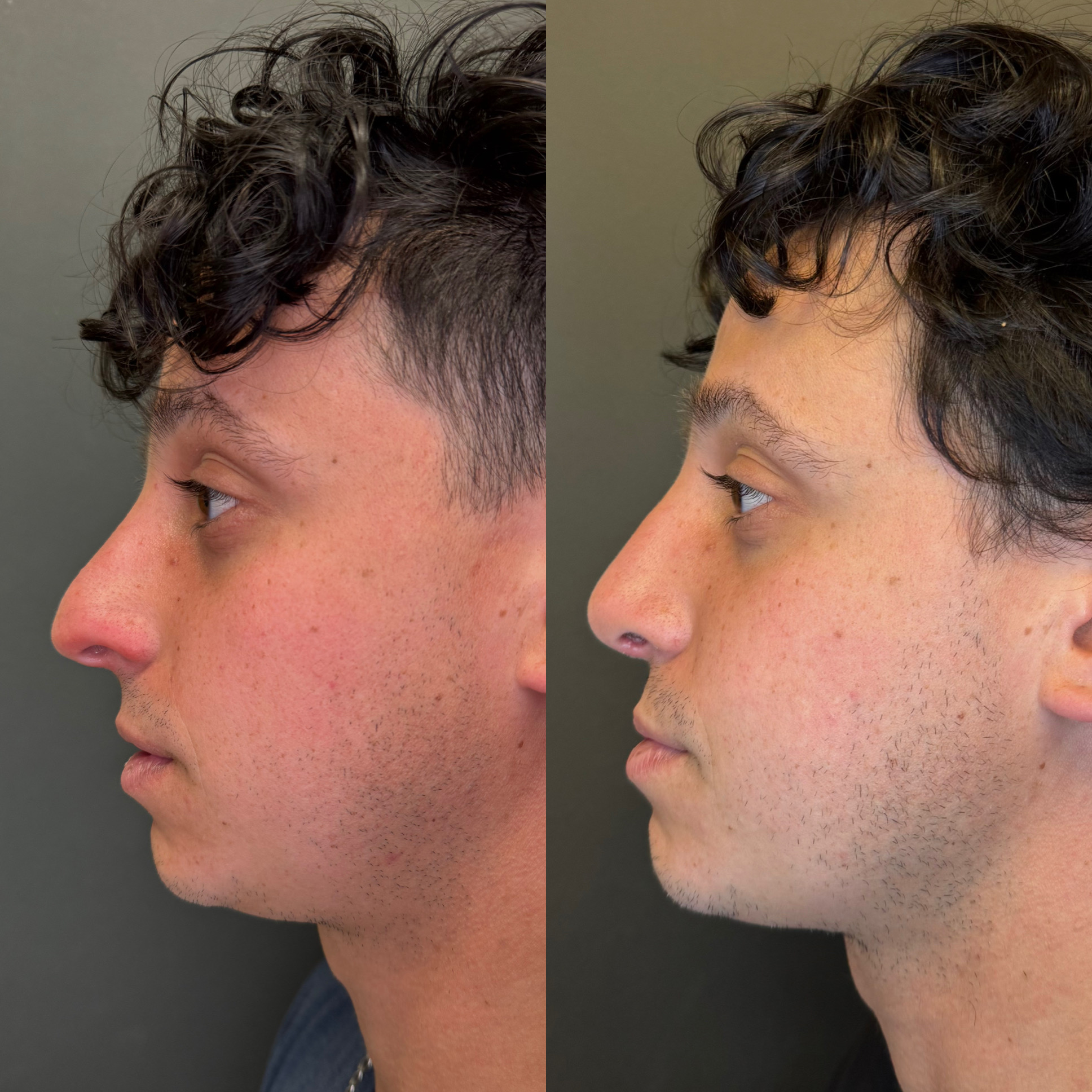
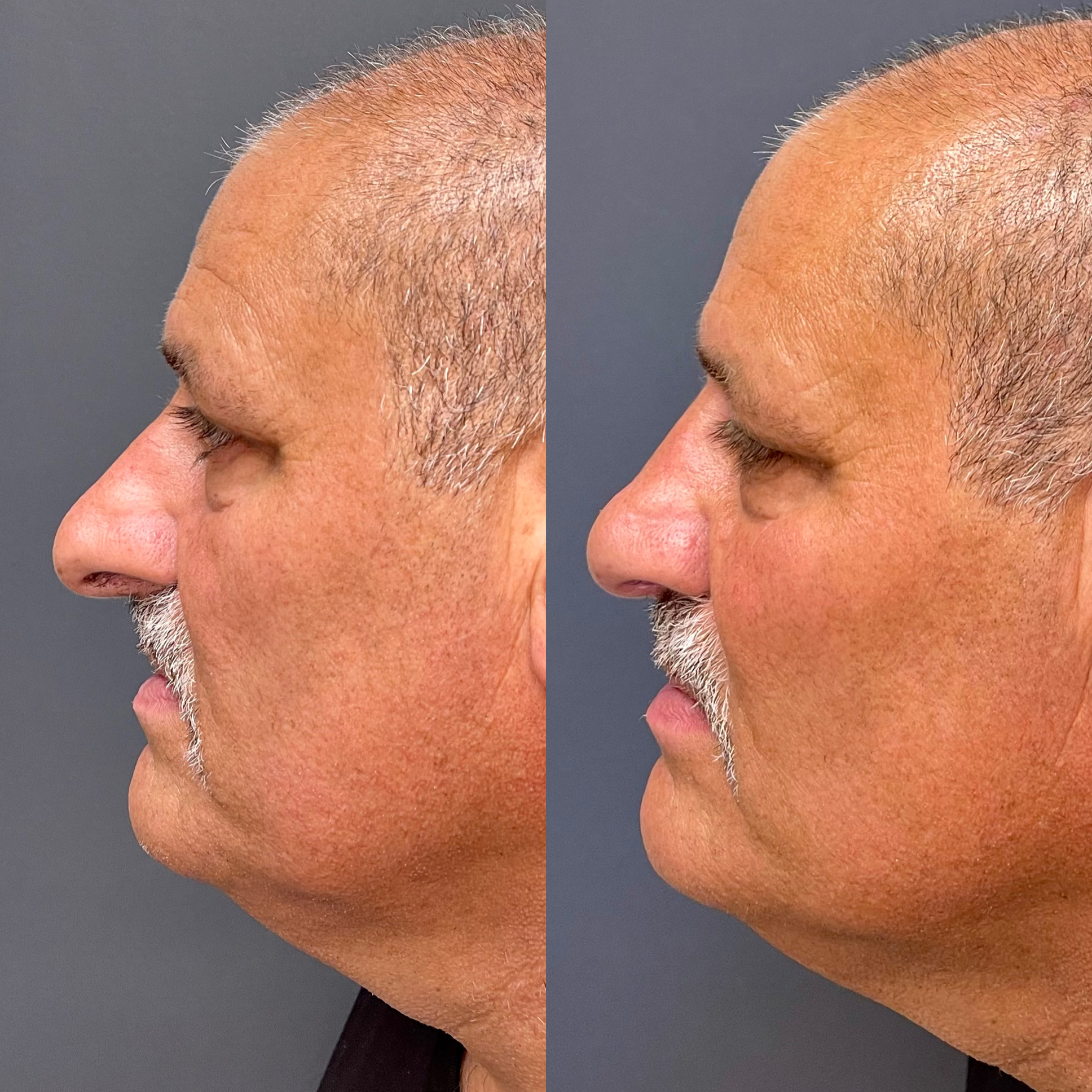
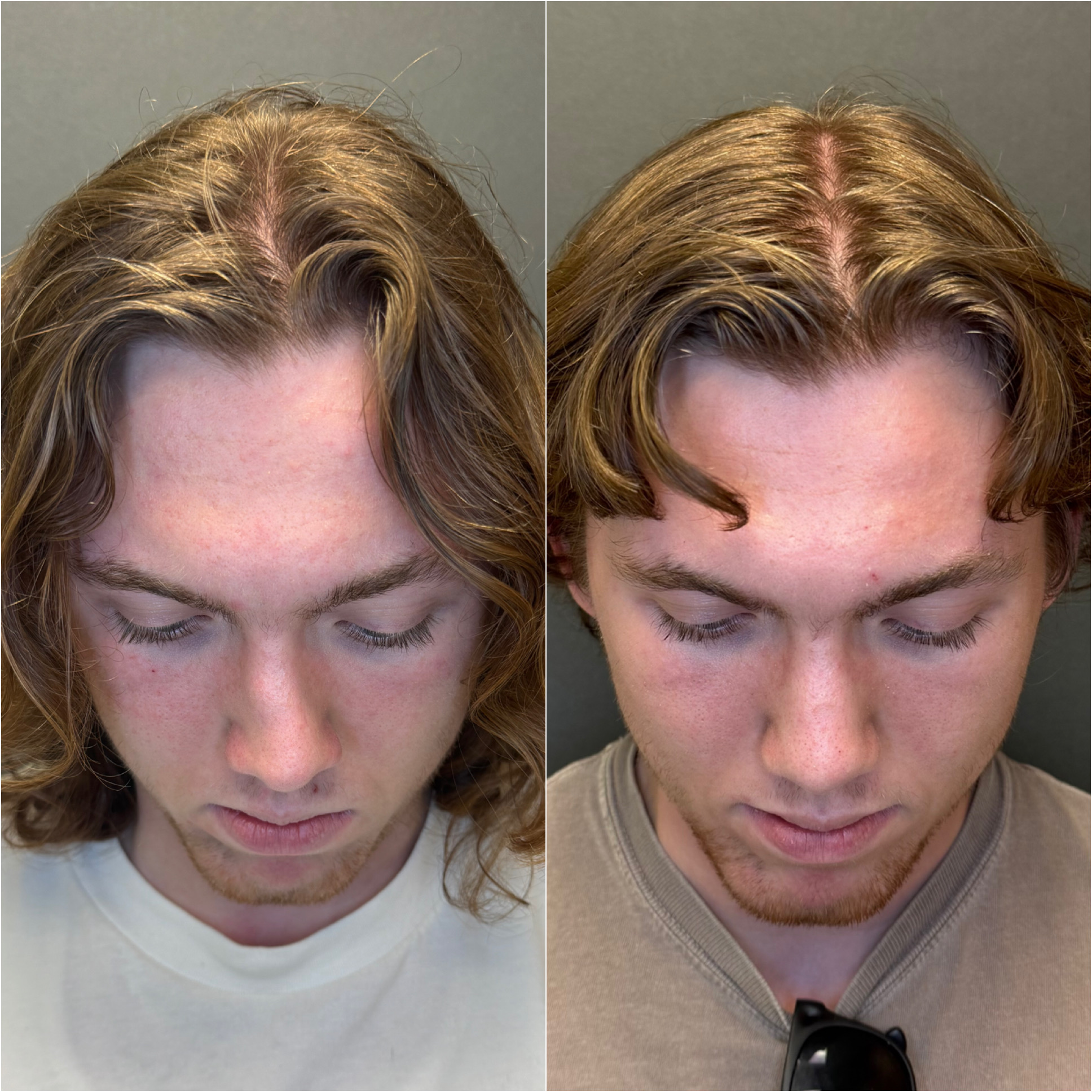
Before & After
Results from male rhinoplasty patients treated at Bay Aesthetics. Individual outcomes vary. Final results continue to emerge over the first 12 to 18 months as swelling resolves.
FAQ — Male Rhinoplasty
The anatomy and goals are different. Female rhinoplasty commonly involves reduction of the dorsal hump, tip refinement, and increased rotation. Male rhinoplasty prioritizes proportion over reduction. Cartilage reduction and tip refinement is much more conservative, and grafts are used in a manner that maintains male angles and avoids any risk of an upturned or over-rotated nose.
Most patients choose a nose that is either straight or retains some degree of character, a subtle irregularity or prominence that keeps it looking natural rather than surgically refined. Male rhinoplasty avoids the sloped or curved profile that is more common in female rhinoplasty. Tip rotation is addressed when needed, but is generally minimal.
Yes. Functional improvements to the nose can be made at the same time as cosmetic refinements, in a single operation. Many male patients come in initially for breathing concerns and address cosmetic goals at the same time, requesting that the nose look better but not overly done.
Not really. Certain areas of the nose may be reduced, but the goal is generally not a small nose. This is one of the most common things men say to Dr. Hashemi in consultation: “Doctor, I’m not getting a small nose, right?” Changes are discussed and planned in detail during consultation, including morphing, so you can clearly communicate the result you are looking for before surgery.
The period that requires significant adjustment to daily life is relatively short. The cast is removed at one week. Most patients are presentable in public within 8 to 10 days, and residual swelling is present but not something casual onlookers will notice. Most return to work around 10 to 14 days after surgery. Physical activity is restricted during the first 3 weeks. The nose continues to refine for up to a year.
Yes, and it is particularly well suited to male cases. Men often have denser, more prominent nasal bones, and preservation of the bridge is critically important. Surgeons can get into trouble in male rhinoplasty by chasing irregularities created by chisels and rasps, ending up with an over-resected and scooped bridge. The ultrasonic piezoelectric device works with sub-millimeter precision, allowing bone to be judiciously improved with finesse, keeping the preoperative plan a predictable outcome.
A Complete Rhinoplasty Practice
Male rhinoplasty is one part of a broader rhinoplasty practice. Many patients benefit from addressing multiple concerns in a single operation.
About Rhinoplasty
Comprehensive overview of the rhinoplasty process: consultation, surgical planning, technique, recovery, and long-term results at Bay Aesthetics.
Ultrasonic Rhinoplasty
Bone work performed with a piezoelectric device rather than conventional chisels, with less bruising, greater precision, and a faster recovery. Backed by Dr. Hashemi’s published research.
Before & After Gallery
View rhinoplasty results from patients treated at Bay Aesthetics, including male rhinoplasty, ultrasonic rhinoplasty, and revision cases.