

NECK LIFT
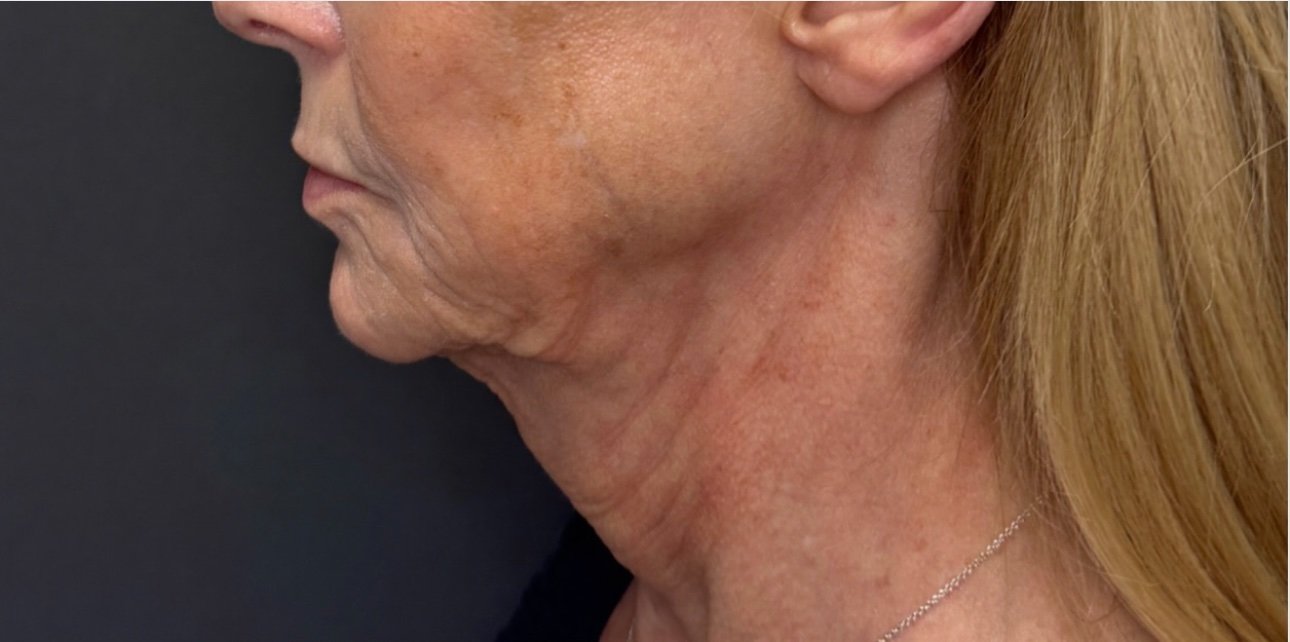
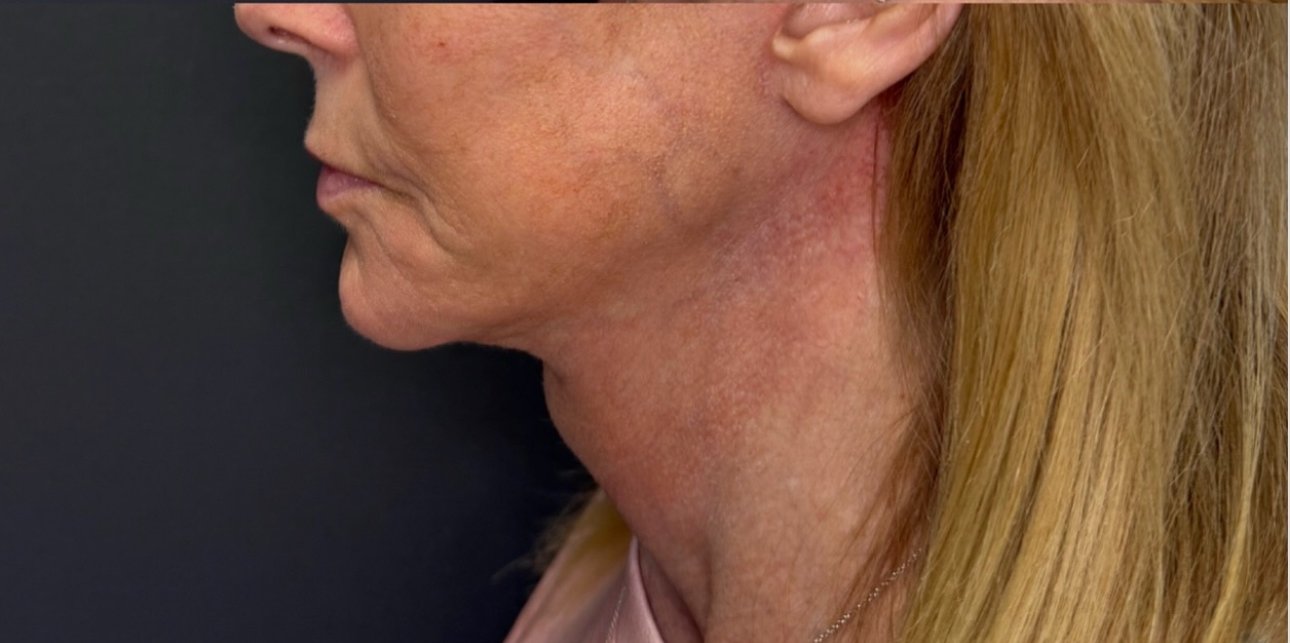 Before
After
Before
After
The neck sets the age of the face
A defined jawline and a clean angle beneath the chin read as youth from across a room, long before anyone studies the eyes or the skin. When that angle softens, whether from loose platysma muscle, accumulated deep fat, or skin that has lost its elasticity, the whole face reads older and heavier than it should. A neck lift restores that architecture.
The operation is not one procedure but a set of decisions. Which layer is responsible, the skin, the fat above the muscle, the fat beneath it, the muscle itself, sometimes the glands and deeper structures, determines what is done. Getting that diagnosis right in consultation matters more than anything that happens in the operating room.
“A sharp angle under the chin is built in the deep structures of the neck. It is not something you can pull out of the skin.”
What does a deep neck lift actually treat?
The neck is treated as a three dimensional contouring problem rather than as skin to be removed or tightened. Dr. Sean Hashemi, a double board certified facial plastic surgeon in Palo Alto, works through the layers that actually produce the contour: the fat above the platysma, the fat beneath it, the muscle itself, and where indicated the deeper structures below that.
Particular attention is paid to the midline platysma, including platysma myotomies and myofascial release around the hyoid region when indicated. That is what allows the cervicomental angle, the angle between the chin and the neck, to be shaped and positioned rather than simply pulled tighter.
“A sharp angle under the chin is built in the deep structures of the neck. It is not something you can pull out of the skin.”
What is deliberately left alone?
The lower neck. The submental treatment area is defined carefully, and the dissection is not extended further down the neck without reason.
This is a deliberate limit rather than a shortcut. Excessive manipulation of the lower neck can make crepey skin there more apparent afterward, so a wider dissection can leave a result that looks worse in the very area it was meant to improve. Doing less in that zone is often what protects the result.
Do you need a central neck lift, or central and lateral?
This is the question that matters more than which technique is used. Every neck here is approached with a deep plane technique, so the meaningful decision is not deep plane versus something lesser. It is whether the neck needs central treatment alone, or central and lateral treatment together.
That decision depends on age, skin quality, the amount and distribution of fat, platysmal laxity, and the patient’s underlying neck anatomy. Two patients with the same complaint frequently need different operations.
Why is it called neck contouring rather than a neck lift?
Because in many patients, improving the neck requires more than lifting skin or tightening the platysma. Depending on the anatomy, reducing excess fat, contouring the digastric muscles, or addressing submandibular gland prominence produces far more improvement in the neck contour than any amount of tightening.
Those deeper structures are the reason a neck can still look full after a technically clean skin and muscle procedure. If the fullness sits beneath the platysma, nothing done above it will reach the problem.
Is a neck lift right for you?
Candidacy is assessed carefully in consultation. These are the presentations most commonly addressed.
Platysmal bands
Vertical cords that run down the front of the neck, visible at rest or with speech. These are edges of the platysma muscle that have separated with time. They do not respond to skin care or weight loss, and they are corrected by repairing the muscle itself.
Fullness under the chin
A heavy or rounded appearance beneath the jaw that persists regardless of weight. Often the responsible fat sits below the platysma muscle, where no external treatment can reach it. Addressing this deep compartment is frequently the single most powerful move in neck surgery.
Jowls with neck laxity
When the jawline has softened along with the neck, the two are usually one process, descent of the deeper tissues of the lower face. In these cases a neck lift alone can leave a mismatch, and the honest recommendation is often a combined approach. This is discussed openly in consultation.
Early laxity in younger patients
Some patients in their thirties and forties have an inherited fullness or a blunted angle under the chin with excellent skin tone. These necks can often be treated through a single hidden incision under the chin, without lifting skin at all.
Built in the deep neck
Most neck lifts here begin through a short incision hidden in the crease under the chin. Through it, the deep structures are addressed directly: fat beneath the platysma is reduced conservatively, the separated edges of the muscle are repaired in the midline, and when deeper structures such as prominent digastric muscles or full submandibular glands contribute to the contour, they can be managed as well. This deep approach, often called a deep neck lift, is the work that creates the angle.
When there is meaningful excess skin, incisions concealed behind and around the ear allow the skin to be redraped smoothly over the new framework. The skin is laid down, never pulled tight. Tension belongs in the repaired muscle layer, not in the skin closure, which is why properly done necks heal with fine, hidden scars.
“The skin is a blanket, not a girdle. It should be laid over the new neck, not used to hold it up.”
Neck lift surgery is performed under general anesthesia in an accredited surgical facility. Depending on what is being addressed, surgery takes roughly two to four hours, longer when combined with a facelift. Most patients go home the same day with a soft supportive wrap.
Recovery is more comfortable than most patients expect. Tightness under the chin is the dominant sensation rather than pain. Most patients are presentable in ten to fourteen days, with a full timeline reviewed on the planning and recovery page.
Who is not a good candidate for a neck lift?
The same principles of patient selection apply as with a facelift. Dr. Hashemi is cautious about operating on active smokers, patients with poorly controlled diabetes, and patients with significant anesthesia or cardiovascular risk. He is equally cautious where prior surgery or trauma has altered the normal anatomy or increased the risk to the nerves or the skin.
Aggressive prior liposuction or Kybella
One group deserves particular caution: patients who have had aggressive prior liposuction or Kybella treatment to the neck. Excessive removal of subcutaneous fat can leave the neck with thin, irregular, or poorly vascularized tissue.
Those patients are not simply harder versions of a routine case. They often require a different strategy than a straightforward neck lift, and that needs to be said before surgery rather than discovered during it.
What will a neck lift not fix?
A neck lift improves neck contour, definition, and tissue position. It is not an operation that corrects every manifestation of aging in the neck, and the difference matters when deciding whether to have it.
Jowling and lower face laxity
A central neck procedure alone is not a substitute for a deep plane facelift when the primary problem is jowling or laxity of the lower face. Treating the neck and leaving the jawline can draw attention to what was left undone.
Skin quality
A neck lift does not automatically correct poor skin quality. In younger patients with thicker skin and primarily excess fat or muscle, the skin often redrapes and contracts very well after contouring. In older patients with substantial laxity or crepey skin, tightening the deeper structures will not eliminate that skin excess or improve its texture.
That distinction is worth understanding before surgery, because it determines how much of the visible change will come from the operation itself.
Why is a good neck lift part of a good facelift?
Because the face and neck are one continuous aesthetic unit. If the lower face is beautifully lifted but the neck remains heavy, lax, or poorly defined, the overall result can feel incomplete no matter how well the facelift itself was performed.
This is one of the more common reasons patients arrive dissatisfied after a previous facelift and ask about revision. The facelift was not necessarily done badly. The neck was simply not addressed to the same standard, and the eye reads the mismatch even when the patient cannot name it.
Where both areas need work, both are planned together. Where the neck is the dominant problem, it is treated on its own terms.
Why does head and neck training matter here?
Because the structures that determine a neck result, the platysma, the digastric muscles, the submandibular glands, and the marginal mandibular nerve, are the anatomy of head and neck surgery rather than an adjacent territory.
American Board of Otolaryngology, Head & Neck Surgery
American Board of Facial Plastic & Reconstructive Surgery
First author on a peer reviewed study of mandibular reconstruction with the fibula free flap in the American Journal of Otolaryngology, measuring the jaw at sub millimeter precision.
Co-author on published research using ultrasound to localize submandibular gland pathology, the same gland whose prominence can determine a neck contour.
Neck lift questions
Why is my neck still full after liposuction?
Because the fullness may not be in the fat that liposuction can reach. Subcutaneous fat sits above the platysma muscle; fat beneath the platysma, a prominent submandibular gland, or bulky digastric muscles all sit deeper and are untouched by liposuction. Addressing those requires opening the deeper layer.
What is the difference between a neck lift and neck contouring?
In practice they describe the same operation done properly. Neck contouring reflects that improving a neck often requires reducing fat, contouring the digastric muscles, or addressing submandibular gland prominence, not simply lifting skin or tightening the platysma.
Do I need a facelift as well as a neck lift?
Often. The face and neck are one continuous aesthetic unit, and if the lower face is lifted while the neck stays heavy, or the reverse, the result can feel incomplete. A central neck procedure alone is not a substitute for a facelift when the main problem is jowling.
Can I have a neck lift if I have had Kybella or liposuction before?
Sometimes, with caution. Aggressive prior liposuction or Kybella can leave the neck with thin, irregular, or poorly vascularized tissue. Those patients often need a different strategy than a straightforward neck lift, which is assessed before surgery is offered.
Will a neck lift get rid of crepey skin on my neck?
Not entirely. In younger patients with thicker skin, the skin often redrapes and contracts well after contouring. In older patients with substantial laxity or crepey skin, tightening the deeper structures will not eliminate the skin excess or improve its texture.
What is the cervicomental angle?
The angle between the underside of the chin and the front of the neck. A defined angle reads as youth, and a blunted one reads as heaviness. It is shaped by the deep structures of the neck, including the platysma and the fat beneath it, rather than by skin tension.
Your neck. Your profile. Your result.
A well-executed neck lift restores a line that photographs, profiles, and first impressions are built on. Done properly, it does not look like surgery. It looks like the neck you remember.
Learn More about Planning & Recoveryfor Facelift & Neck Lift→